



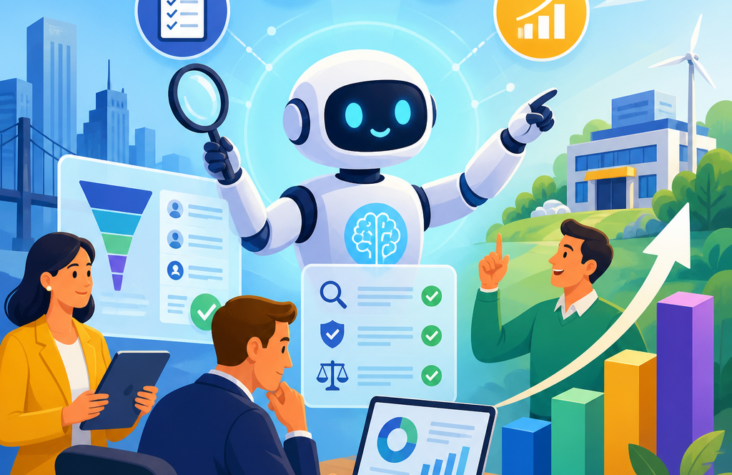
How AI Is Changing PE Screening, Diligence, and Value Creation
Artificial intelligence is reshaping private equity at every stage of the investment lifecycle, from how firms source opportunities to how they diligence targets and create value after close. In private equity, screening refers to the process of identifying and prioritizing potential deals, diligence is the structured investigation of a target company before acquisition, and value creation is the work done after investment to improve growth, margins, and exit outcomes. The reason this matters now is simple: private equity firms face more data, more competition, tighter timelines, and higher expectations from limited partners than ever before. Traditional spreadsheet-heavy workflows and relationship-driven pattern recognition are still important, but they are no longer sufficient on their own. AI can process larger datasets, surface hidden correlations, automate repetitive review, and help investment teams move faster without sacrificing rigor.
I have watched this shift accelerate over the last few years as private equity sponsors, lenders, and operating partners moved from curiosity to practical deployment. The conversation has changed from “Will AI matter in private equity?” to “Where can AI create real edge, and where is human judgment still nonnegotiable?” That distinction is critical. AI is not replacing deal professionals, industry expertise, or negotiation skill. It is augmenting them. The firms that benefit most are not the ones chasing hype. They are the ones using AI to improve decision quality, compress cycle times, and deepen conviction in investment themes. As a hub page on trends and market dynamics in private equity and capital markets, this article explains where AI is having the biggest impact, what use cases are proving durable, what risks are emerging, and how firms should think about adoption across the full deal process.
Why AI has become a major private equity trend
Several market forces are pushing AI to the center of private equity strategy. First, dealmakers are flooded with information. A middle-market process can include customer data, CRM exports, contracts, financial statements, call transcripts, HR records, pricing files, website analytics, and market research reports. Second, private equity firms are under pressure to find differentiated returns in more efficient markets. When more buyers are chasing the same quality assets, informational advantage matters. Third, holding periods, financing conditions, and exit environments have become less predictable, which raises the value of better forecasting and faster intervention. Fourth, generative AI and machine learning tools are now easier to access through cloud platforms, specialized vendors, and in-house data teams.
This trend is especially relevant in sectors with complex data environments such as healthcare, software, financial services, logistics, and industrial distribution. In software investing, for example, AI can analyze usage telemetry, churn patterns, support tickets, and sales efficiency in ways that go far beyond a standard quality-of-earnings review. In healthcare services, it can surface reimbursement risk, referral concentration, and labor inefficiencies faster than manual methods. In industrials, it can connect procurement, pricing, inventory, and route density data to identify margin expansion opportunities. The broader point is that AI becomes most valuable when a firm has a clear investment thesis and enough structured or semi-structured data to test that thesis quickly.
How AI is changing deal screening and origination
Screening is where many firms are seeing early wins because the workflow is data-heavy and repetitive. Historically, associates and vice presidents would review teaser decks, CIMs, industry reports, and banker outreach manually, then compare each opportunity against the firm’s investment criteria. AI now helps automate parts of that first-pass review. Natural language processing can extract sector, geography, revenue size, margin profile, customer concentration, and growth indicators from teaser materials. Machine learning models can rank inbound opportunities against historical successful deals, strategic priorities, and risk filters.
Some firms are also using AI to build proactive origination engines. Instead of waiting for intermediated processes, they map fragmented industries, identify founder-owned businesses that fit a thesis, and monitor signals such as hiring trends, web traffic, patent activity, pricing changes, customer reviews, and regional expansion. This is especially powerful in roll-up strategies where sponsors need to identify hundreds of potential platform or add-on targets. AI can help prioritize outreach based on likelihood of fit, succession timing, or operating characteristics.
That said, AI-driven screening works best as a triage layer, not as a final decision-maker. It can tell a team which companies deserve attention. It cannot replace the judgment that comes from decades of pattern recognition, management meetings, and understanding how businesses actually make money. Screening is becoming faster and broader, but the best firms still validate what the model flags with direct human analysis.
How AI is improving commercial, financial, and operational diligence
Diligence is where AI’s practical value becomes most visible. In commercial diligence, AI can analyze customer cohorts, churn behavior, NPS trends, win-loss data, call transcripts, and market sentiment at a scale consultants and internal teams could not review manually within traditional deal timelines. That helps investors answer fundamental questions: Is growth durable? Are customers sticky? Is pricing power real? Is product-market fit widening or narrowing?
In financial diligence, AI can help normalize datasets, detect anomalies, compare actual results with management narratives, and flag unusual working capital patterns. It can review general ledger detail, identify seasonality distortions, and surface nonrecurring items faster than a purely manual process. It does not replace a quality-of-earnings provider, but it can make the review sharper and more targeted.
Operational diligence is another major area of adoption. AI can evaluate procurement data, logistics routes, SKU complexity, labor productivity, maintenance patterns, and service performance to identify post-close improvement levers. In labor-intensive businesses, workforce analytics can highlight overtime dependence, turnover hotspots, and scheduling inefficiencies. In recurring-revenue models, AI can connect customer support and product usage data to reveal hidden churn risk or upsell opportunities.
| PE function | Traditional approach | How AI changes it | Main benefit |
|---|---|---|---|
| Deal screening | Manual review of teasers and banker outreach | Automated extraction, ranking, and fit scoring | Faster prioritization |
| Commercial diligence | Sample-based customer and market analysis | Large-scale review of customer, pricing, and sentiment data | Deeper demand visibility |
| Financial diligence | Spreadsheet-led variance and ledger review | Anomaly detection and pattern recognition across transactions | Quicker risk identification |
| Operational diligence | Consultant-led process mapping | Data-driven bottleneck and margin analysis | Earlier value creation planning |
| Portfolio management | Monthly KPI packs and periodic reviews | Near-real-time monitoring and predictive alerts | Faster intervention |
How AI is changing portfolio value creation after the deal closes
The strongest private equity use case for AI may actually come after closing. Once a firm owns the company, it has better data access, stronger incentives, and more control over implementation. That is where AI can move from insight to action. Revenue operations is a major example. Sponsors are using AI to improve lead scoring, optimize pricing, reduce customer churn, refine cross-sell campaigns, and increase salesforce productivity. In service businesses, AI can improve staffing, route planning, and customer support response times. In industrial and distribution businesses, it can improve procurement, inventory forecasting, and preventive maintenance.
Value creation also becomes more measurable. If a sponsor invests in AI-enabled pricing or demand forecasting, it can track gross margin improvement, conversion uplift, or reduced churn directly. That matters because private equity ultimately wins through outcomes, not experimentation. The firms gaining the most are not just talking about AI strategy at board meetings. They are building playbooks that operating partners can deploy across multiple portfolio companies. This is where pattern replication creates outsized returns.
Another important trend is AI inside the portfolio company itself. Buyers increasingly underwrite not only how they can use AI as owners, but whether the target can use AI to become a better business. A software company embedding AI into workflow automation or customer service may expand ARPU and retention. A healthcare services platform using AI for scheduling, coding support, or patient communications may improve labor productivity. In that sense, AI is not only changing private equity practice. It is changing what private equity wants to own.
What AI means for private equity operating models and talent
As AI adoption deepens, private equity firms are changing how they staff and organize around data. Ten years ago, many middle-market firms had limited in-house analytics capabilities. Today, more sponsors are hiring data scientists, portfolio analytics leaders, digital operating partners, and technology diligence specialists. Larger firms are building internal AI councils and governance frameworks. Smaller firms are partnering with niche providers that specialize in sourcing analytics, document review, pricing tools, or portfolio monitoring dashboards.
This shift also changes expectations for traditional investment professionals. Associates and vice presidents who once spent enormous time gathering and formatting data are increasingly expected to interpret outputs, challenge assumptions, and connect analysis to investment judgment. Operating partners are expected to know which AI initiatives actually move EBITDA and which are just software demos. CEOs of portfolio companies are being asked harder questions about data quality, workflow maturity, and digital readiness earlier in the hold period.
That is one reason this topic belongs at the center of private equity and capital markets trend analysis. AI is not just another technology tool. It is influencing firm structure, portfolio governance, diligence speed, and even the profile of talent firms recruit internally. For related strategy and exit preparation themes, firms often connect these conversations to broader advisory planning through resources like the Legacy Advisors platform and practical frameworks such as The Entrepreneur’s Exit Playbook.
The risks, limitations, and governance issues firms cannot ignore
For all its promise, AI introduces real risks. Data quality is the first and most obvious. If the underlying CRM, ERP, or financial data is incomplete or inconsistent, AI can amplify bad inputs into misleading outputs. Confidentiality is another major issue. Deal materials often include highly sensitive financial, customer, and legal information. Firms need clear policies on what can be uploaded into third-party tools, what must remain in secure environments, and how outputs are stored and shared.
Model hallucination and false confidence are also real problems, especially with generative AI. A polished answer is not the same as a correct one. In diligence, that distinction matters enormously. If a model misreads a contract clause, summarizes a legal issue incorrectly, or fails to identify a concentration risk, the cost can be substantial. That is why human review remains essential. AI should narrow the field of inquiry and increase speed, but final conclusions still require trained professionals.
There is also the question of competitive parity. As more firms adopt similar tools, the edge from basic AI use will shrink. The durable advantage will come from proprietary data, workflow integration, operator expertise, and the discipline to connect AI outputs to actual investment decisions. In other words, simply buying an AI tool will not create alpha. Building an AI-enabled operating system for investing might.
What the future looks like for AI in private equity and capital markets
Over the next several years, AI in private equity will likely move from point solutions to embedded infrastructure. Screening tools will become standard. Diligence workflows will become more data-rich and faster. Portfolio dashboards will shift from retrospective KPI reporting to predictive monitoring. Lenders and capital markets participants will also use AI more aggressively in underwriting, covenant monitoring, and sector surveillance, which will influence how deals are financed and priced.
The firms that win will be the ones that combine three things: disciplined thesis development, strong data foundations, and experienced human judgment. AI can help identify targets, interrogate assumptions, and uncover value creation opportunities. It cannot replace the relationship-building, negotiation skill, sector knowledge, and emotional discipline that still define great investors. That is the real trend to watch. The market is not rewarding firms that merely experiment with AI. It is rewarding firms that operationalize it.
For founders, operators, and investors, the takeaway is straightforward. AI is changing private equity screening, diligence, and value creation because it changes how quickly firms can learn, decide, and act. If you are preparing a company for institutional capital or a future sale, assume buyers will use AI-enhanced workflows to examine your business. If you are an investor, assume your competitors are already doing the same. The advantage now goes to the firms that prepare early, build the right systems, and use AI as a force multiplier rather than a shortcut. Study the trend, improve the process, and keep building with intention.
Frequently Asked Questions
How is AI changing private equity screening?
AI is making private equity screening faster, broader, and more evidence-based. Traditionally, screening relied heavily on banker relationships, sector expertise, manual research, and a relatively narrow set of structured data points. AI expands that process by helping firms scan much larger markets, analyze more companies at once, and identify patterns that may not be obvious through conventional sourcing methods alone. Instead of looking only at standard financial metrics or inbound deal flow, investment teams can use AI to review news coverage, customer sentiment, hiring activity, web traffic signals, patent filings, pricing behavior, supply chain indicators, and other alternative data that may point to growth, operational stress, or strategic fit.
In practice, this means firms can prioritize targets more intelligently. AI models can help surface companies that resemble past successful investments, flag businesses entering inflection points, or detect underfollowed opportunities in fragmented markets. It can also reduce time spent on low-probability opportunities by automating first-pass qualification and ranking deals against a firm’s investment thesis. That does not eliminate human judgment. Screening still depends on sector context, competitive dynamics, and partner conviction. But AI improves the quality and speed of the funnel by helping firms see more, compare more, and focus attention where it matters most.
What role does AI play in private equity diligence?
AI is increasingly valuable in diligence because it helps teams process large volumes of information quickly while improving consistency across workstreams. Diligence in private equity is a structured effort to understand a target company’s strengths, risks, financial profile, operations, customer health, and growth potential before acquisition. That process often involves reviewing data room documents, contracts, financial statements, legal materials, CRM exports, customer data, operational reports, and management interview notes. AI can help organize, summarize, classify, and extract insights from this material far more efficiently than fully manual review.
For example, AI can be used to detect unusual trends in revenue concentration, customer churn, pricing changes, margin compression, working capital movements, or sales pipeline quality. It can support contract analysis by identifying renewal clauses, change-of-control language, customer termination rights, and supplier concentration risks. It can also assist with commercial diligence by synthesizing customer feedback, competitor positioning, and market signals from unstructured sources. In technology diligence, AI may help assess codebase documentation, incident patterns, product usage, and support ticket themes. The benefit is not just speed. AI can create a more systematic review process, reducing the likelihood that material issues are overlooked simply because teams are operating under intense deal timelines.
That said, AI is not a substitute for rigorous diligence. Outputs still need validation by investment professionals, operating partners, consultants, legal advisors, and functional experts. The most effective use of AI in diligence is as an accelerant and analytical layer, not as an autonomous decision-maker. It helps teams ask better questions earlier, test assumptions faster, and go deeper on the issues that most affect investment outcomes.
Can AI improve post-acquisition value creation in private equity?
Yes, and this is one of the most important areas where AI can influence returns. After a deal closes, private equity firms focus on value creation, meaning the operational and strategic work required to increase revenue, expand margins, strengthen management execution, and improve exit readiness. AI can support this effort across portfolio companies by identifying operational inefficiencies, improving forecasting, and enabling faster decision-making in functions such as sales, pricing, procurement, customer service, finance, and HR.
In revenue growth, AI can help optimize lead scoring, customer segmentation, upsell targeting, marketing spend allocation, and sales productivity. In operations, it can improve demand planning, inventory management, route optimization, maintenance scheduling, and process automation. In finance, it can enhance cash flow forecasting, anomaly detection, and reporting discipline. In customer-facing environments, AI can reduce service costs while improving responsiveness through better triage, knowledge management, and workflow support. For software and data-rich businesses, AI may also become part of the product itself, creating new monetization opportunities and differentiation in the market.
From a private equity perspective, the real advantage is repeatability and scale. Firms can identify use cases that work in one portfolio company and apply them across others, creating a playbook-driven approach to AI-enabled value creation. However, strong execution still matters. Returns do not come from adding AI for its own sake. They come from selecting use cases tied to measurable business outcomes, aligning management incentives, upgrading data infrastructure where needed, and tracking results with discipline. When deployed thoughtfully, AI can materially strengthen the speed and effectiveness of the post-close playbook.
What are the biggest risks of using AI in PE screening, diligence, and value creation?
The biggest risks are poor data quality, overreliance on model outputs, weak governance, and unclear business application. AI systems are only as reliable as the data, assumptions, and prompts behind them. In screening, low-quality or incomplete data can produce misleading rankings or cause firms to miss attractive opportunities. In diligence, AI may summarize information confidently but inaccurately, especially if documents are inconsistent, highly technical, or context-dependent. In value creation, AI initiatives can consume time and capital without meaningful ROI if they are not tied to specific operational bottlenecks or growth levers.
There are also legal, ethical, and confidentiality concerns. Private equity firms handle sensitive company information, so they need clear guardrails around data access, model usage, vendor security, and regulatory compliance. If teams upload confidential materials into unsecured environments or rely on tools without proper controls, the risks can be significant. Bias is another concern, particularly when AI is used in talent-related decisions, customer targeting, or pattern recognition that may unintentionally reflect flawed historical assumptions.
Perhaps the most common strategic risk is treating AI as a shortcut to judgment. PE investing is still about understanding markets, incentives, management quality, competitive positioning, and execution risk. AI can sharpen analysis, but it can also create false confidence if teams stop interrogating the underlying facts. The best firms manage this by combining AI adoption with governance frameworks, human review, data hygiene standards, and clear accountability for decisions. In other words, AI should strengthen the investment process, not weaken its discipline.
Will AI replace private equity professionals, or will it mainly augment their work?
AI is far more likely to augment private equity professionals than replace them. Private equity is a relationship-driven, judgment-intensive business. Winning deals, evaluating management teams, shaping strategy, aligning boards, negotiating transactions, and driving organizational change all require human credibility and decision-making. What AI can do is remove some of the manual burden that consumes time across the investment lifecycle. It can automate research tasks, accelerate document review, improve pattern detection, and generate faster first drafts of analyses, which allows professionals to spend more time on synthesis, conviction-building, and action.
At the junior level, AI may significantly change day-to-day work by reducing hours spent on repetitive research, data cleaning, benchmarking, and summarization. At the senior level, it can improve the speed and quality of decision support by highlighting risks, surfacing opportunities, and making portfolio monitoring more dynamic. Over time, the firms that benefit most will likely be those that redesign workflows around human-plus-AI collaboration rather than simply layering tools onto old processes.
So the real shift is not replacement but redistribution of effort. Teams that learn how to use AI effectively may evaluate more opportunities, diligence them more rigorously, and support portfolio companies more systematically than peers. That can translate into a genuine competitive advantage. But the core PE skill set still matters: clear thinking, commercial judgment, governance, negotiation, and the ability to create value through people and execution. AI changes how the work gets done, but it does not eliminate the need for experienced investors and operators.